
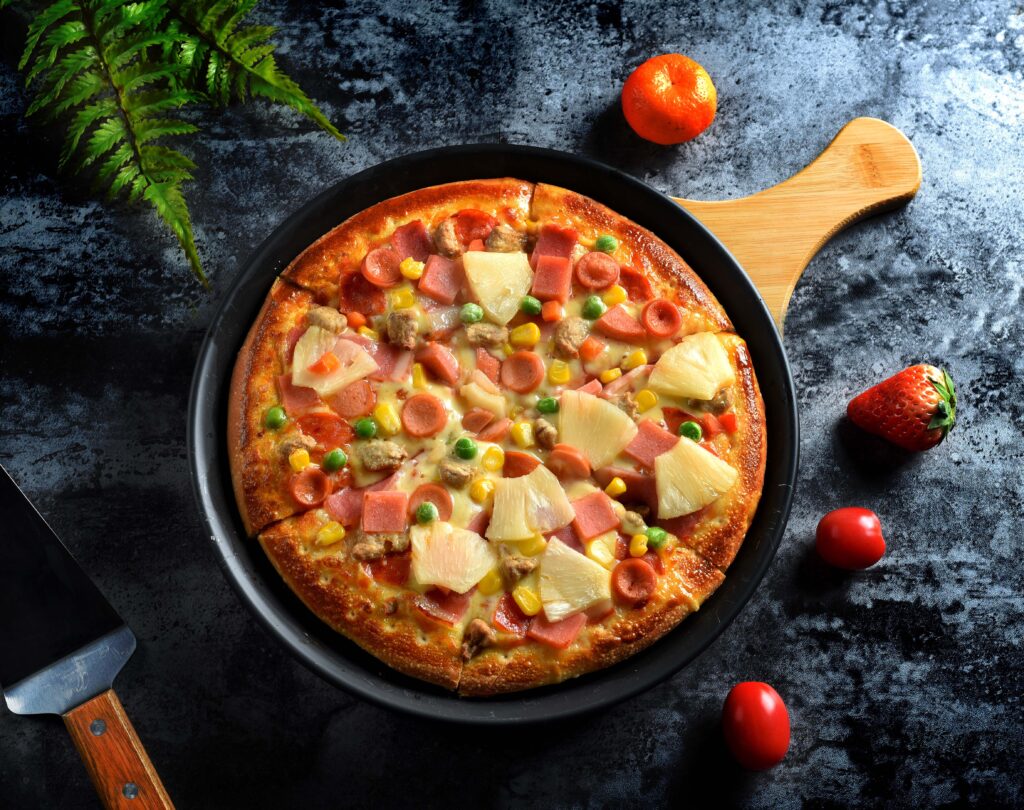
Few food debates are as fierce or as funny as the pineapple on pizza debate. For decades, friends have fallen out over it, chefs have defended or denounced it, and the internet has made endless jokes about it.
Some call it genius. Others call it a culinary crime.
But where did this argument start, and why does it divide people so deeply? To understand that, we need to look at the history of pineapple pizza, the science behind flavour, and how Londoners have made up their minds slice by slice.
A Slice of History: Where It All Began
Despite the name “Hawaiian pizza”, the dish didn’t come from Hawaii at all. It was invented in 1962 by Sam Panopoulos, a Greek-born restaurateur in Ontario, Canada. One day, on a whim, he opened a tin of pineapple and added the fruit to a standard ham pizza. The result was surprisingly popular.
The name “Hawaiian” actually came from the brand of tinned pineapple Panopoulos used. He never imagined it would spark a global debate that would still be going strong sixty years later.
By the 1980s, pineapple pizza had spread worldwide, including the UK. London pizzerias began offering it alongside traditional margherita and pepperoni options, and the city’s curious diners gave it a try.
Some loved the sweet-and-salty twist. Others swore it was wrong to put fruit anywhere near melted cheese.
The Science of Flavour: Sweet Meets Savoury
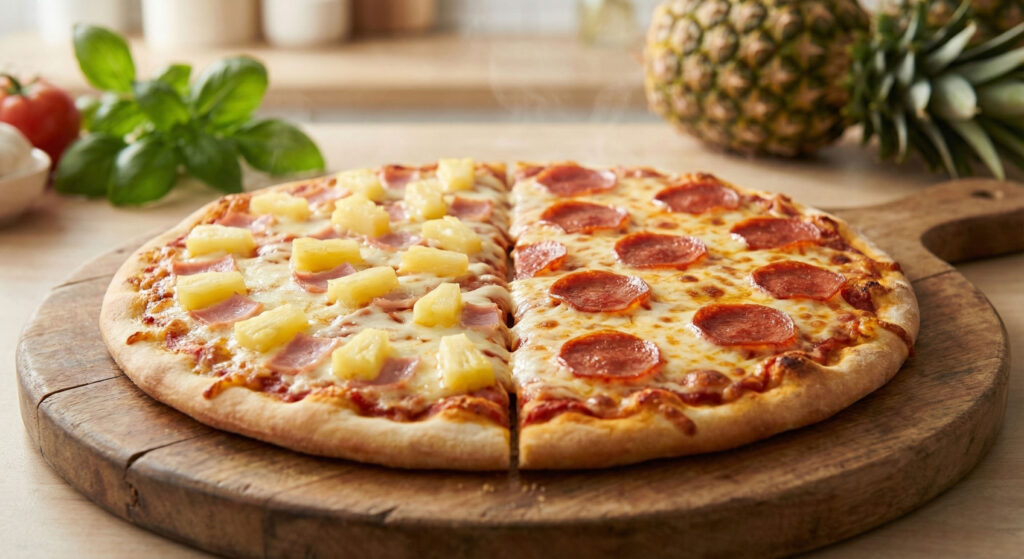
Why do some people adore pineapple on pizza while others despise it? The answer lies in taste chemistry.
Pineapple brings sweetness and acidity, while pizza toppings like cheese and ham deliver saltiness and fat. When combined, they create flavour contrast, a sensory balance that many humans find appealing.
The same logic explains why salted caramel or apple sauce with roast pork work so well.
However, taste perception is personal. Some people’s taste buds are more sensitive to acidity, so pineapple feels too sharp or sweet against the creamy cheese. Others enjoy that clash, it wakes up the palate and adds freshness.
Scientists also note that flavour is influenced by memory and emotion. If you first tried Hawaiian pizza as a child at a birthday party, your brain links it with fun and comfort.
If you grew up in a household that prized strict Italian traditions, you might see it as a culinary betrayal.
Cultural Reactions: Around the World and in London
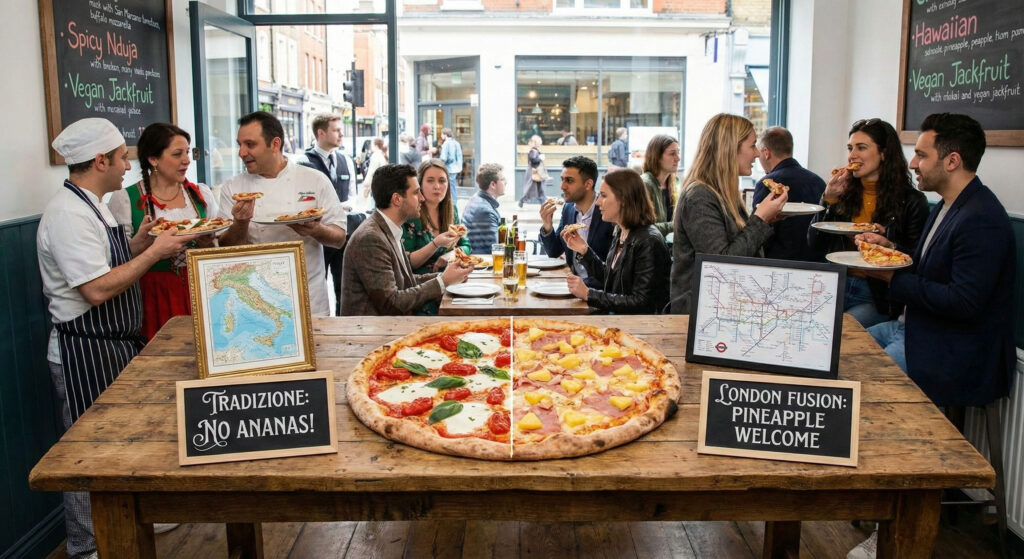
In Italy, where pizza was born, many traditionalists view pineapple as heresy. For them, pizza is about simplicity; dough, tomato, mozzarella, basil. Adding fruit is unthinkable.
Some Italian chefs have even joked that pineapple on pizza should be banned (half-joking, half-serious).
In North America, though, it’s a classic. Canadians proudly claim it, Americans argue over it, and nearly every takeaway chain offers a version.
In the UK, and particularly London, pineapple pizza has become normal. From Soho to Shoreditch, you’ll find it on menus in casual restaurants and delivery apps alike. It may not top the popularity charts, but it’s far from taboo. London’s diverse food scene has always welcomed fusion, and pineapple-topped pizza fits right in beside curry-inspired pies and vegan pepperoni slices.
On the internet, the discussion never ends. Polls regularly appear on social media asking, “Should pineapple be allowed on pizza?” The answers are always split right down the middle, proof that this isn’t just about food, it’s about identity.
Does Pineapple on Pizza Really Taste Bad?
Let’s settle one thing: “bad” is subjective. Taste isn’t like maths, there’s no single right answer.
To those who dislike it, the problem often lies in texture: the contrast between hot cheese and juicy fruit feels strange. For others, it’s the temperature difference, cooked pineapple retains moisture that some find unpleasant.
But for fans, that same contrast is what makes it brilliant. The sweetness cuts through the salt, making every bite lively and balanced. Think of it like adding a squeeze of lemon to grilled fish, an unexpected burst that lifts the dish.
In fact, chefs today are reinventing pineapple pizza in creative ways. Instead of tinned fruit, some use roasted pineapple for caramelised depth. Others add chilli oil or jalapeños for a sweet-spicy kick.
Even vegan pizzerias are experimenting with pineapple toppings paired with plant-based “ham”.
Conclusion: A Matter of Taste and Perspective
So, does pineapple on pizza really taste bad? Not necessarily. It depends entirely on your palate, your background, and maybe even your mood.
The pineapple on pizza debate shows how food can be both personal and universal, sparking arguments, laughter, and endless curiosity. Whether you love it or hate it, that golden fruit on a cheesy slice has earned its place in food history.
Next time you’re in London and spot “Hawaiian pizza” on the menu, why not give it another chance? You might just discover that the world’s most controversial topping tastes better than you remember.